Just past the first house beyond the car we had this site. A short wharf called Hatch's Wharf was built in 1819, and owned by who else but Lemuel Hatch.


Looking down Hatch and Derby Wharves.
An old photo of Derby Wharf in 1890.


Home for Elderly Women

Next door to the old ladies home is the Custom House, both on the waterfront.

We strolled through town, following the red line painted on the sidewalk. Full circuit was about 3 miles. The red line brought us to the Visitor's Center, which is what we were looking for and couldn't find when we found the free parking spot. So all ended well. This is a child's painting contest winning entry. This child has a definite talent. I love this map of town.


The red painted line crossed town and brought us to the oldest, still standing home built in 1727. Built by sea captain John Crowninshield and later became the home of Reverend William Bentley. Both men from very influential families and well respected by the town folk.

Good old red line then brought us to the Witches Museum. This was a wonderful experience. Admission bought you a seat to witness a presentation of the hysteria that overtook Salem for a short period of time. In January of 1692 the daughter and niece of Rev. Sam Parris of Salem Village became ill. Dr. William Griggs of the Village was called in and diagnosed bewitchment. This put into motion the forces that would ultimately result in the death by hanging of nineteen men and women and the pressing death of one man. Seven others were condemned and left forgotten in prison. But the lives of many many more were irrevocably changed.
Rebecca Nurse was condemned and hanged.

Rebecca Nurse was condemned and hanged.
The statue in front of the museum is of Roger Conant, the founder of Salem. He was born in England in 1592, one hundred years before the witch trials. He came from England with his family in 1622 and landed in Plymouth.


Bill standing in front of the bell dedicated to veterans of Essex County.

Walking through old Salem.


These lovelies are like the women hanging around on bows of ships.


And who doesn't recognize Elizabeth Montgomery, the famous witch of all from the television show Bewitched.

All this walking was making us hungry so Trish found us this wonderful Deli. The sandwiches were delicious and the portions were generous.


The house below was the home of Judge Jonathan Corwin, charged with the investigations of witchcraft in and around Salem in 1692. He was instrumental in sending nineteen innocent people to the gallows. All nineteen refused to admit to witchcraft and maintained their innocence to the end.


Salem naturally has a financial focus on witchcraft history. I found the historical aspect of this tragic period of Salem's past very interesting. The witch, goblin, casting spells and fortune telling hype around it were off putting for me. I can understand the nature of capitalizing on something but it seemed to trivialize the tragedy.

Bill in the stockade.

I had to have my turn too.


This was an interesting cemetery. None of those accused and hung for witchcraft are buried here now. At one time there graves were set aside in a separate location in the cemetery.


All the graves were removed and reburied in undisclosed places. To this day no one knows where.

The outside wall of the Pirates Museum. Boston's North Shore was known as The Gold Coast and was a pirate's haven in late 17th century. In 1691, the Salem Puritans hired Captain Kidd to find and destroy Blackbeard, who was living and looting the outer islands. Kidd was unsuccessful and later turned pirate himself. He was captured in Boston in 1699 and hanged in 1701.

Richard More was buried in the cemetery mentioned above.


The Friendship of Salem is a full-sized, fully operational replica of Friendship, a cargo ship built in Salem in 1797. The original Friendship made 15 voyages around the world, trading local products. Today, Friendship sails to nearby ports, helping to bring the region's maritime heritage to life.


 Pedrick's Store House from before the American Revolution.
 I think she's a little paler than me.
Down the waterfront we all trudged, it was getting late and all our feet were hurting. We were headed to the House of the Seven Gables.
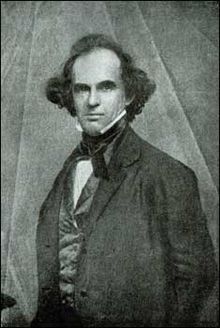
In 1668, Captain John Turner built a mansion that inspired author Nathaniel Hawthorne to pen the American Classic The House of The Seven Gables in 1851.
Nathaniel Hawthorne


and Maine.

So it was a great day. Free parking, good lunch, history, family reunions, and good friends, gosh what more can you ask from one day. We are content. So again, I thank you for taking time to share our trip and remind you to come back soon.


No comments:
Post a Comment